
Introduction
Electrolytes have become increasingly popular in recent years. Colourful sachets and tablets promise better hydration, improved performance and recovery — and, if nothing else, make drinking water a little more exciting.
But electrolytes aren't a new discovery. They're essential minerals that are already present throughout our bodies and our diets, and our bodies have sophisticated systems for keeping their concentrations within a narrow range.
So does adding an electrolyte sachet to your water actually hydrate you better — or are most of us already getting everything we need?
What are electrolytes?
Electrolytes are minerals that carry an electrical charge when dissolved in fluids. They include sodium, potassium, chloride, magnesium, calcium, phosphate and bicarbonate.
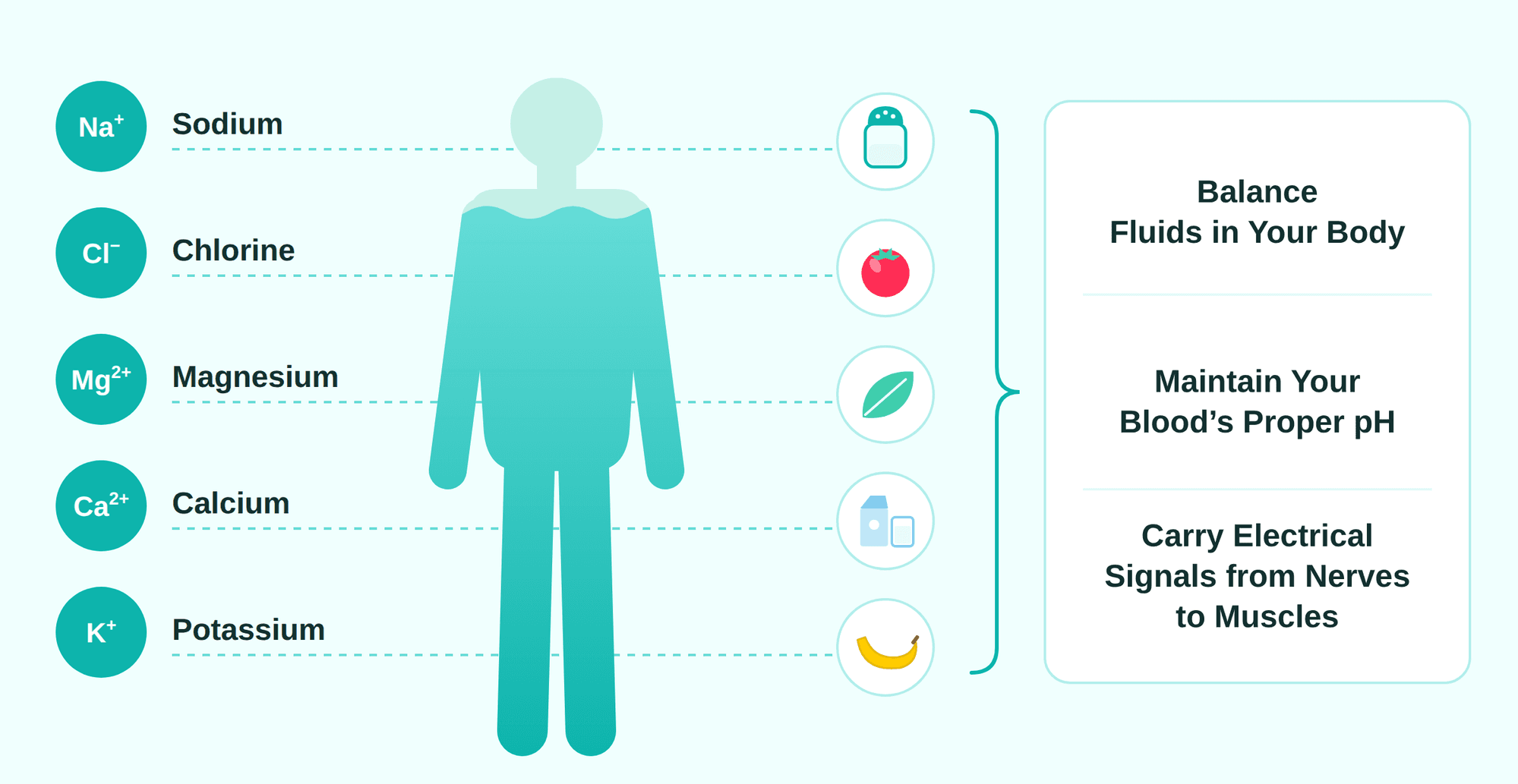
This electrical charge allows them to perform a surprisingly wide range of jobs. Sodium and potassium gradients across cell membranes are fundamental to nerve impulses and muscle contraction, while sodium also plays an important role in maintaining fluid balance.
These aren't nutrients we only get from supplements. Sodium chloride is simply table salt, while potassium is naturally present in foods including fruit, vegetables, beans and potatoes. For most healthy people, a varied diet provides the electrolytes the body needs.
The Role of Electrolytes in the Body
Discover the 5 habits that boost your longevity
Unlock a doctor-reviewed 5-day guide to the core pillars of long-term health—diet, exercise, lifestyle, sleep, and mental wellbeing. Evidence-based, practical, and designed to help you start making meaningful changes today.
No spam. Unsubscribe anytime.
By continuing, you agree to receive occasional updates from Emerald. See our Privacy Policy.
What do they do?
Our bodies are continually working to maintain a state of homeostasis, which essentially means keeping our internal environment stable. This includes tightly regulating things such as body temperature, blood glucose, fluid levels and the concentration of electrolytes in our blood and tissues.
Electrolytes are an important part of this balancing act. Sodium and potassium, two of the main electrolytes found in popular electrolyte brands, are involved in everything from nerve signalling and muscle function to maintaining fluid balance. The kidneys play a particularly important role, continually adjusting how much water and electrolytes are retained or lost in our urine.
When we become dehydrated, hormonal signals tell the kidneys to conserve water and sodium, producing a smaller volume of more concentrated urine. When we have sufficient fluid, the kidneys can excrete more water. This finely controlled system helps maintain the balance of water and electrolytes within the body.
Are electrolyes more hydrating than water?
For most healthy people going about their normal day, water alongside a normal diet is sufficient to maintain hydration. We already consume electrolytes through our food, and our kidneys and hormonal systems continually regulate the balance between water and electrolytes.
The NHS recommends drinking fluids if you are dehydrated. When significant amounts of fluid and electrolytes have been lost through vomiting or diarrhoea, a pharmacist may recommend an oral rehydration solution to replace the water, salts and sugars that have been lost. Importantly, an oral rehydration solution designed to treat dehydration isn't necessarily the same as a commercially available sports or wellness electrolyte drink.
Electrolyte-containing drinks may become more useful when significant amounts of both water and electrolytes have been lost, such as through prolonged sweating. This doesn't mean that adding electrolytes to water will necessarily provide a meaningful hydration benefit during normal day-to-day life.
Longevity starts with awareness
Less than £1/day. Test 115+ biomarkers. Personalised plan and 1:1 GP support.
When might you actually benefit from electrolytes?
We lose both water and electrolytes when we sweat, particularly sodium and chloride. How much we lose varies considerably between individuals and depends on factors including how much we tend to sweat, the concentration of electrolytes in our sweat, the duration and intensity of exercise, and environmental conditions.
For shorter bouts of exercise, water is sufficient. During prolonged or intense exercise — particularly lasting more than around an hour, in hot conditions, or when sweat losses are high — replacing sodium alongside fluid can become more useful.
This is particularly relevant to endurance sports such as long-distance running, cycling and triathlon, or prolonged exercise in hot and humid environments. However, there isn't a universal amount of electrolytes that everyone needs to replace: sweat rates and sodium losses vary substantially from person to person.
It is also important to remember that we obtain electrolytes from our diet. Sodium, for example, is a component of ordinary table salt and is already abundant in many people's diets.
Popular products contain several hundred milligrams of sodium per serving. For context, the NHS recommends that adults consume no more than 6 g (6,000 mg) of salt per day, which is equivalent to approximately 2,400 mg of sodium. A drink containing 500 mg of sodium therefore provides around one-fifth of this amount.
Importantly, 2,400 mg is a recommended maximum rather than a target to reach through supplementation, and it includes sodium consumed from food as well as drinks.
References
McDermott BP, Anderson SA, Armstrong LE, et al. National Athletic Trainers’ Association position statement: fluid replacement for the physically active. Journal of Athletic Training. 2017;52(9):877–895. doi: 10.4085/1062-6050-52.9.02.
NHS. Dehydration. Available at: https://www.nhs.uk/conditions/dehydration/ (Accessed: 21 September 2026).
Related articles


Test 115+ biomarkers for fine-tuning your health
See your results in 3 days with high-level accuracy and a certified GP-reviewed action plan