

Introduction
Both Wegovy and Mounjaro are powerful weight loss medications. But, like any medication, both can come with certain side effects.
Most people on these medications experience some side effects in the first few weeks, and the most common ones are digestive. In clinical trials, most were mild-to-moderate in severity, were transient, and resolved without persistent upset. In other words: real, but manageable, and they pass.
The reason behind side effects is straightforward: these medications slow down how quickly your stomach empties. This can lead to temporary symptoms such as nausea, diarrhoea, and constipation. GLP-1 medications also act directly on the parts of the brain that control nausea and appetite. Most of the side effects below come down to those mechanisms. They're not always a sign something's wrong. They're usually a sign the medication is doing what it's supposed to.
This is also why your Emerald clinician starts you on the lowest possible dose and steps up gradually. Most digestive side effects are concentrated during the dose-escalation period rather than after patients reach a steady maintenance dose, so the slow start gives your body time to adjust and keeps symptoms to a minimum.
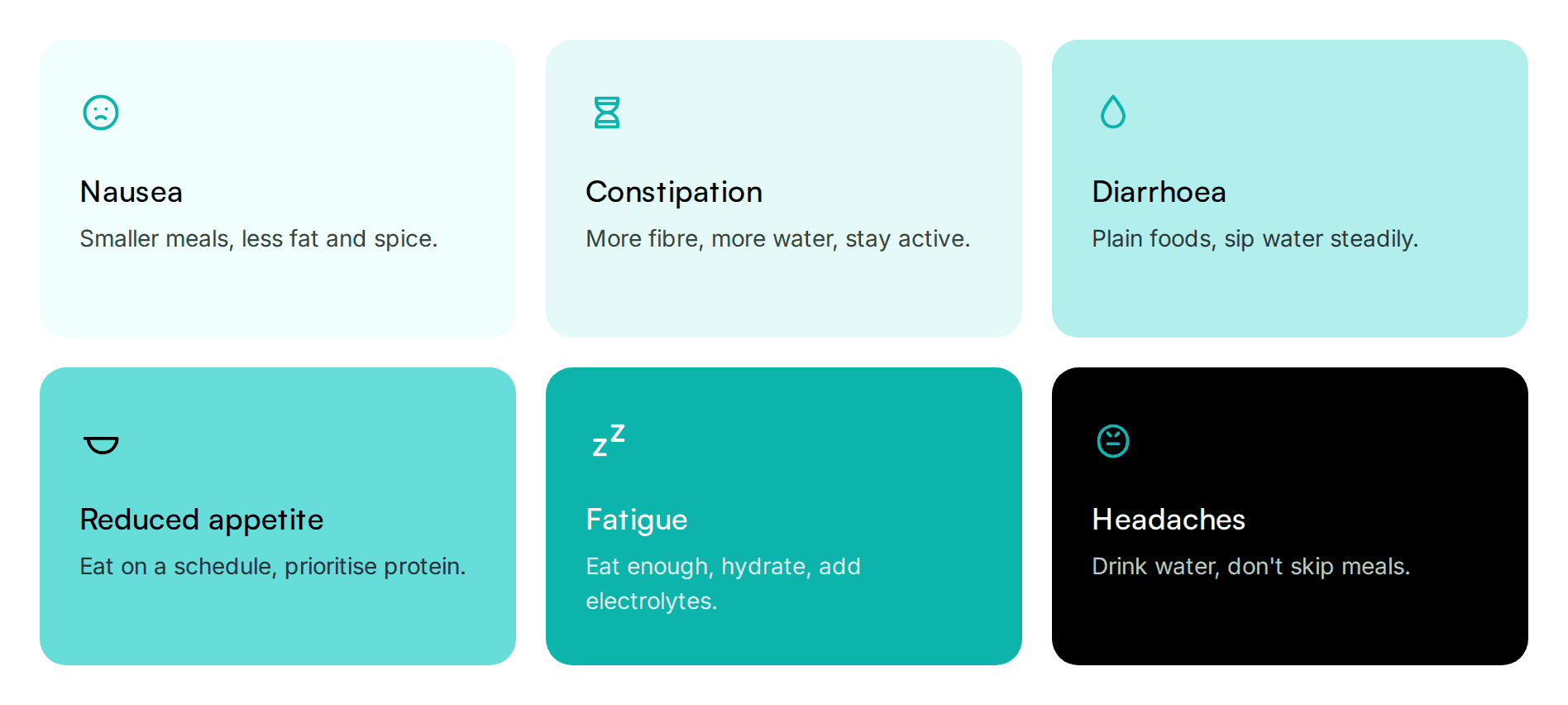
Nausea
The most common side effect, particularly in the first few weeks and after each dose increase. GLP-1 medications significantly impact central nausea centres, contributing to their gastrointestinal side effects, and food sitting in the stomach for longer than usual adds to the queasy feeling, especially after larger or richer meals.
The clinical guidance is consistent on what helps: reducing meal size, mindfulness to stop eating once full, avoiding eating when not hungry, avoiding high-fat or spicy food (particularly during the initial dose-escalation period), and moderating intake of alcohol and fizzy drinks. Staying well hydrated through the day also helps.
Speak to your clinician if nausea is stopping you from eating or drinking properly, or if it's severe, persistent, or comes with strong stomach pain.
Discover the 5 habits that boost your longevity
Unlock a doctor-reviewed 5-day guide to the core pillars of long-term health—diet, exercise, lifestyle, sleep, and mental wellbeing. Evidence-based, practical, and designed to help you start making meaningful changes today.
No spam. Unsubscribe anytime.
By continuing, you agree to receive occasional updates from Emerald. See our Privacy Policy.
Constipation
These medications could slow down digestion, so food moves through your system more slowly
The standard guidance is to increase dietary fibre and water intake, ideally through whole foods like oats, lentils, vegetables, and fruit. Staying active helps too: even a daily walk makes a difference. If dietary changes aren't enough, a fibre supplement like psyllium husk is a reasonable next step.
Speak to your clinician if constipation lasts longer than a week despite these changes, or if it comes with significant bloating, stomach pain, or vomiting.
Diarrhoea
Your gut is really sensitive to changes in digestion, so diarrhoea can occur, usually in the first few weeks of starting your GLP-1 prescription.
Stick to plain, easy-to-digest foods until it settles: for instance: rice, bananas, toast, and plain chicken. Avoid greasy or spicy meals and limit caffeine and alcohol. Hydration matters more than usual here; sip water steadily through the day to replace what you're losing.
Speak to your clinician if it lasts more than a few days, or if you're struggling to keep fluids down.
Longevity starts with awareness
Less than £1/day. Test 115+ biomarkers. Personalised plan and 1:1 GP support.
Reduced appetite
This is technically how the medication works, not a side effect, but it can take some getting used to. Many people find their appetite drops more than expected, sometimes to the point where they forget to eat or feel full after just a few bites.
Treat meals as something you do on a schedule rather than something you wait to feel hungry for. Prioritise protein at every meal: the clinical guidance for people on GLP-1 medication is to combine adequate protein intake, evenly distributed across meals, with structured resistance training to preserve muscle as you lose weight. If solid food feels like too much, a protein supplement is a practical way to hit your intake.
Headaches
Often related to dehydration, eating less, or simple adjustment to the medication in the first weeks.
Drink water consistently through the day rather than in big bursts. Make sure you're eating regularly, even if portions are small, and don't skip meals just because you're not hungry. If you usually rely on caffeine, cutting back suddenly can trigger headaches of its own: taper gradually rather than stopping cold.
Speak to your clinician if headaches are severe, frequent, or come with changes in your vision.
When something doesn't feel right
The side effects above are common and manageable. Occasionally, people experience symptoms that need prompt attention: severe or persistent stomach pain (especially pain that radiates to the back), unbearable nausea, ongoing vomiting that stops you keeping fluids down, sudden changes in your vision, intense and persistent headaches, severe fatigue, or any sign of an allergic reaction like swelling of the face or throat or difficulty breathing.
These are uncommon, but if any of them happen, contact your Emerald clinician straight away or seek urgent medical care.
More serious side effects to be aware of
Both Wegovy and Mounjaro are considered safe for most people, and the side effects below are rare. Most people on either medication will never experience them. But if you do, seek medical help straight away. In the UK, you can call NHS 111 for advice or head to A&E if symptoms are severe.
Severe stomach pain that doesn't go away. Intense ongoing pain, sometimes radiating to your back and often alongside a high temperature or vomiting, can signal issues with the pancreas or the gallbladder. It's very rare, affecting fewer than 1% of people in trials, but it needs hospital treatment.
Allergic reactions. Trouble breathing or swallowing, or swelling of the face, lips, or throat after an injection, can indicate a serious reaction and needs immediate help.
Sudden changes in vision. Some people have reported eyesight changes, such as blurred vision. Mention these symptoms to your doctor promptly rather than waiting for your next review.
Being under doctor-led care, with a prescriber who knows your full medical history and reviews your progress regularly, is the single best protection against rare side effects becoming serious problems.
References
Wilding JPH et al. (2021). Once-Weekly Semaglutide in Adults with Overweight or Obesity. New England Journal of Medicine, 384:989–1002. The STEP 1 trial of semaglutide (Wegovy). Used for: GI events were mild-to-moderate, transient, and resolved without permanent discontinuation.
Caruso I & Giorgino F (2024). Dietary Recommendations for the Management of Gastrointestinal Symptoms in Patients Treated with GLP-1 Receptor Agonist. Diabetes, Metabolic Syndrome and Obesity. Used for: mechanism of GI side effects (gastric emptying + central nausea centres).
Healthy Meals Incentives review of SURMOUNT-1 (Jastreboff AM et al., 2022, NEJM). Used for: GI side effects are concentrated during dose escalation rather than after reaching maintenance dose.
Wharton S et al. (2022). Managing the gastrointestinal side effects of GLP-1 receptor agonists in obesity: recommendations for clinical practice. Postgraduate Medicine, 134(1):14–19. Used for: clinical mitigation advice on meal size, food avoidance, alcohol, and fibre/water for constipation.
Almandoz JP et al. (2024).Nutritional priorities to support GLP-1 therapy for obesity: a joint Advisory from ACLM, ASN, OMA, and TOS. American Journal of Clinical Nutrition. Used for: protein and resistance training guidance to preserve lean mass.
Related articles



Test 124 biomarkers for fine-tuning your health
See your results in 3 days with high-level accuracy and a certified GP-reviewed action plan