

Introduction
Modern medicine is exceptionally good at one thing: keeping you alive. It is considerably less good at keeping you well.
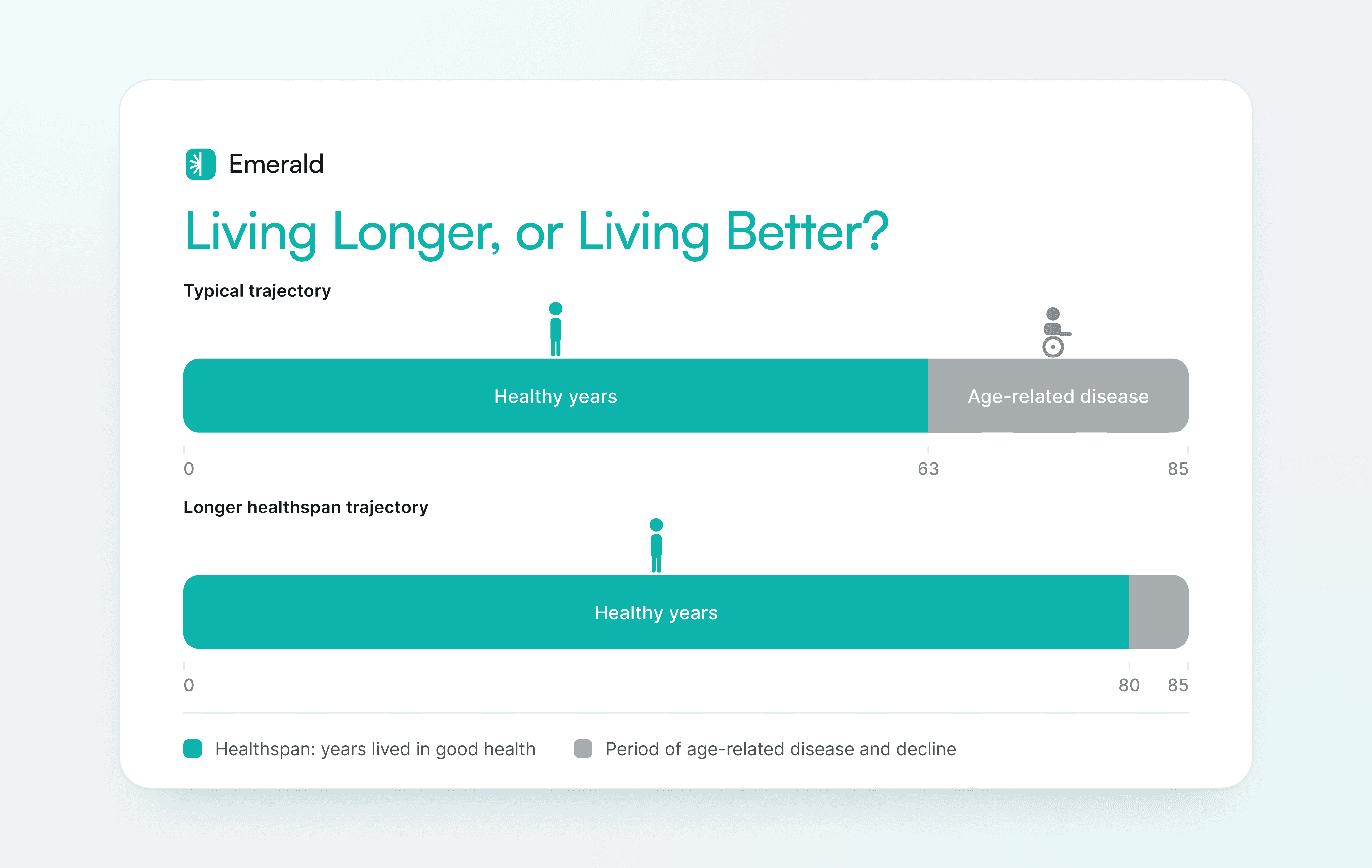
The average person in the UK now lives into their late seventies or early eighties. But a significant portion of those extra years - typically the last 15 to 20 - are spent managing chronic illness: diabetes, heart disease, dementia, a slow accumulation of conditions that medicine can treat but rarely reverse.
We have added years to life. We have not necessarily added life to years.
Lifespan vs. Healthspan
Lifespan is the total number of years you are alive. Healthspan is the number of those years spent in good health - moving freely, thinking clearly, living without significant disability or chronic pain.
For most people, these two numbers diverge sharply. The gap between them - the years spent in managed decline rather than active life - is what researchers call the 'healthspan gap'. The goal of modern preventive medicine is not simply to add more years. It is to compress the period of decline so it arrives as late as possible, and lasts as briefly as possible.
Discover the 5 habits that boost your longevity
Unlock a doctor-reviewed 5-day guide to the core pillars of long-term health—diet, exercise, lifestyle, sleep, and mental wellbeing. Evidence-based, practical, and designed to help you start making meaningful changes today.
No spam. Unsubscribe anytime.
By continuing, you agree to receive occasional updates from Emerald. See our Privacy Policy.
Why the Gap Opens Long Before You Notice
The healthspan gap does not open suddenly. It accumulates over decades.
High blood pressure, slowly rising blood sugar, low-grade inflammation - these rarely produce symptoms in their early stages. They build for years, sometimes decades, before they declare themselves as a diagnosis. By the time that diagnosis arrives, the underlying damage is often well established.
This is the central limitation of healthcare systems which react to symptoms: it waits for illness before it acts. A yearly check-up can catch some things, but it cannot track the gradual drift that precedes most chronic disease.
What Long-Lived Populations Can Teach Us
Some of the most instructive evidence on healthy ageing comes from observational research on populations where people tend to remain in good health well into advanced age. Residents of regions such as Okinawa in Japan and Sardinia in Italy share a pattern of daily habits that maps closely onto what the broader nutritional and lifestyle literature recommends: largely plant-based diets, constant low-level physical activity through ordinary daily life rather than structured exercise, strong social ties, and a clear sense of purpose.
The lifestyle pattern that keeps people healthy in rural Sardinia turns out to be the same one that nutritional science has been recommending for decades.
Longevity starts with awareness
Less than £1/day. Test 115+ biomarkers. Personalised plan and 1:1 GP support.
What Actually Moves the Needle
Sleep is probably the most underestimated factor in healthy ageing. Seven to nine hours of quality sleep is not a luxury - during deep sleep, the brain clears metabolic waste products associated with neurodegeneration, repairs tissue, and regulates immune function. Chronic poor sleep can accelerate biological ageing.
Muscle mass becomes progressively more important the older you get. Sarcopenia - the age-related loss of muscle - is a primary driver of the falls, frailty, and loss of independence that define decline for many people in later life. Strength training directly counters this. Aerobic exercise protects cardiovascular and metabolic health. Neither requires extreme effort; consistency matters more than intensity.
Diet that supports healthspan is not about strict restriction. It is about reducing the chronic inflammation that underpins most of the conditions we are trying to prevent - which means whole foods, less added sugar, and limited ultra-processed food. Alcohol deserves specific attention: the evidence for a genuinely safe drinking level has continued to weaken, and its association with cancer risk in particular is stronger than most people appreciate.
Mental and cognitive health round out the picture. What is good for the heart is broadly good for the brain - exercise increases cerebral blood flow and supports the formation of new neural connections. Chronic stress works against this: sustained high cortisol damages blood vessels and suppresses immune function over time. Social connection and a sense of purpose are among the strongest independent predictors of cognitive health in later life.
References
Related articles



Test 124 biomarkers for fine-tuning your health
See your results in 3 days with high-level accuracy and a certified GP-reviewed action plan