
Key takeaways
Different purposes: NHS blood tests are requested by a clinician for a clinical reason, while private tests let you choose what to test and when.
The NHS Health Check is narrow by design: it tests cholesterol for adults aged 40 to 74, plus blood sugar and kidney function if you have risk factors.
Private and NHS blood tests are equally accurate: look for a UKAS ISO 15189 accredited lab and, in England, a CQC-registered provider.
Follow-up matters: choose a provider whose doctors review your results and tell you what to do next, and see your GP or call NHS 111 if you have symptoms.
Introduction
NHS and private blood tests are processed by similar accredited labs. The real differences are who decides what gets tested, what it costs and what happens once the results come back.
On the NHS, a GP, nurse or specialist requests a blood test when there's a clinical reason, usually to confirm or rule out a diagnosis. A private blood test lets you choose when to test and what to test, without needing a referral. You pay for that choice, and private panels usually cover a much wider range of biomarkers.
This guide explains how each route works, how accurate private tests are, whether your GP will use the results and how to decide which is right for you.
How NHS blood tests work
On the NHS, blood tests are requested for a clinical reason. A GP, nurse or specialist decides you need one, based on your symptoms, your medical history or a condition being monitored. They choose which tests to run, and the tests are free.
What to expect:
Booking: your GP surgery or hospital arranges the test. Some areas let you book online.
Results: these usually take a few days and can take up to a few weeks.
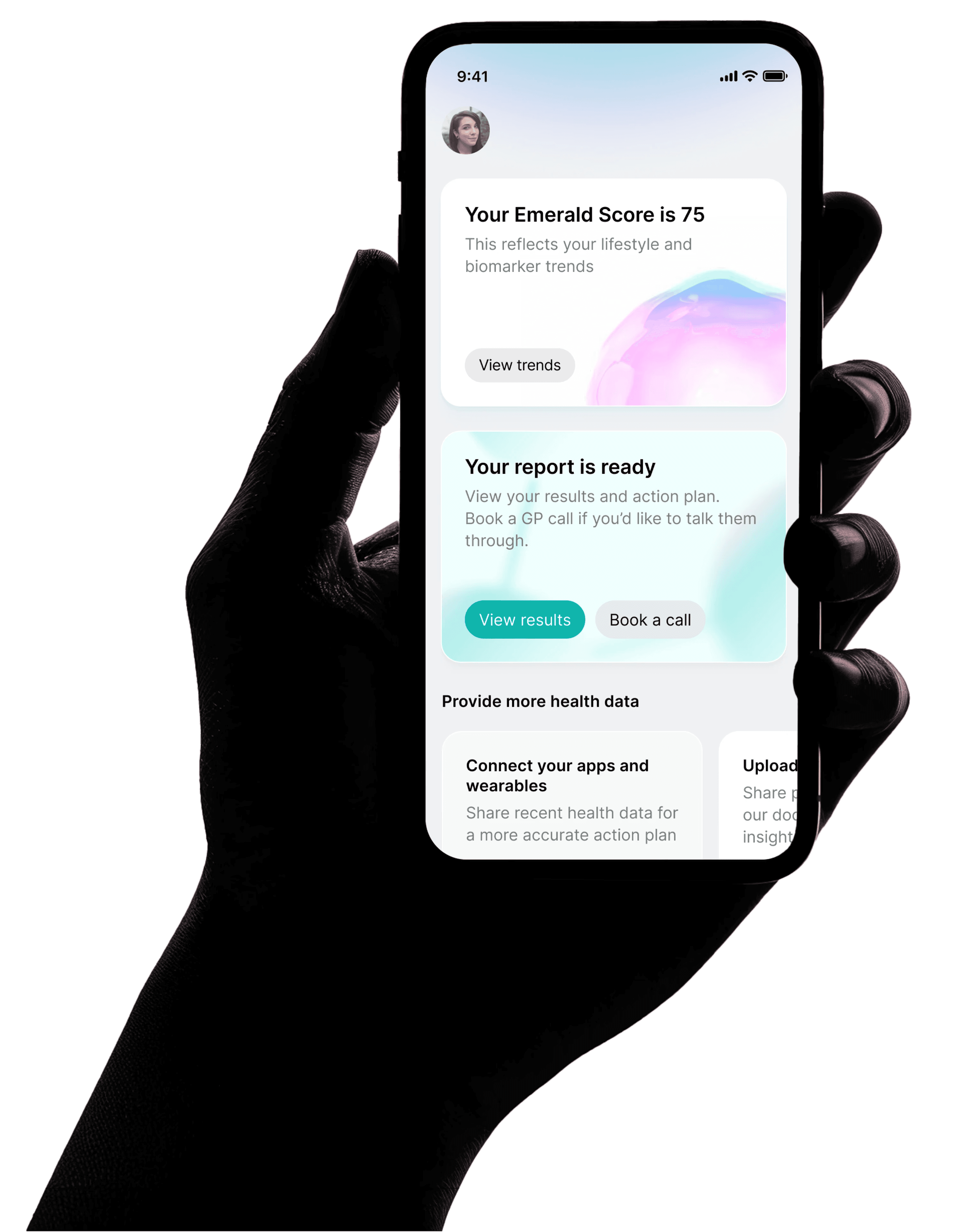
Getting your results: many results appear in the NHS App or your online GP record. Some surgeries only contact you if something needs discussing, so you may need to check the app or ring the surgery.
Follow-up: your GP or specialist explains what the results mean and what happens next.
5 habits that boost your longevity
Get a doctor-reviewed 5-day guide to diet, exercise, sleep, lifestyle and mental wellbeing. Practical, evidence-based, and ready to start today.
No spam. Unsubscribe anytime. By continuing, you agree to receive occasional updates from Emerald. See our Privacy Policy.
The NHS Health Check
In England, the NHS offers a free health check every five years to people aged 40 to 74 who don't already have certain conditions, such as heart disease, diabetes, kidney disease or high blood pressure. It looks for early signs of heart disease, stroke, kidney disease, type 2 diabetes and dementia.
The check can be done at your GP surgery or, in some areas, online with a home finger-prick kit. It includes:
height, weight and waist measurements
a blood pressure reading
questions about your lifestyle and family history
a blood test for total and HDL cholesterol, which feeds into your heart disease risk score
You may also be tested for HbA1c (a marker of type 2 diabetes risk) and kidney function if you have risk factors, such as a higher body mass index (BMI) or raised blood pressure.
The NHS Health Check is designed to spot heart disease and diabetes risk. It doesn't include tests such as a full blood count, thyroid function, iron levels, vitamin D or hormones. You would only be offered those on the NHS if a clinician thought you needed them.
How private blood tests work
With a private blood test, you don't need a referral. You choose what to test and when, from a single marker such as vitamin D to a full-body panel covering heart health, hormones, thyroid, liver, kidneys and vitamins.
There are two main ways to give a sample:
Home finger-prick kit: you collect a few drops of blood and post the sample to a lab.
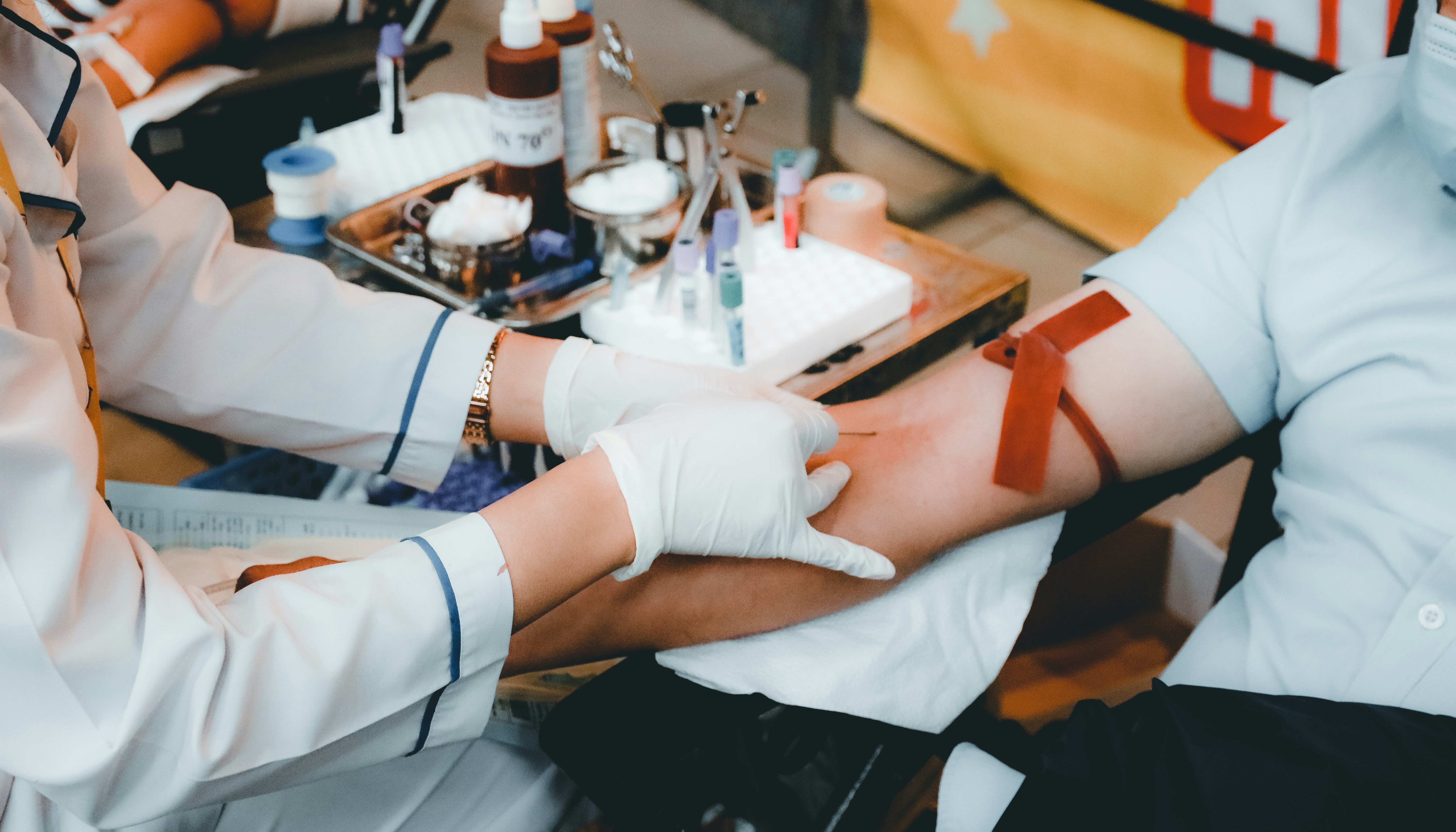
Venous blood draw: a trained professional takes blood from a vein in your arm at a clinic or during a home visit. This is the same method the NHS uses for most blood tests.
Results usually arrive online within days. What happens next varies between providers. Some send numbers and reference ranges only, while others include a doctor's review and advice on next steps.
At Emerald, blood is taken in clinic, and a GP reviews every result. Our 124-biomarker test costs £219, and results arrive in 5 to 7 working days.
Longevity starts with awareness
Less than £1/day. Test 124 biomarkers. Personalised plan and 1:1 GP support.
NHS vs private blood tests: side-by-side comparison
The NHS tests for a clinical reason, while a private test covers what you choose to check.
NHS blood test (via your GP) | NHS Health Check | Emerald | |
|---|---|---|---|
Cost | Free | Free | £219 |
Who can have it | Anyone a clinician decides needs a test | Ages 40 to 74 without certain conditions, every 5 years | Anyone who books |
Who decides what's tested | Your GP, nurse or specialist | Set checks, plus extra tests if you have risk factors | You choose |
Biomarkers tested | Depends on your symptoms | 2 blood markers (total and HDL cholesterol), or up to 4 if you have risk factors (adding HbA1c and kidney function) | 124 |
Results | A few days to a few weeks | At the appointment or soon after | GP-reviewed results in 5 to 7 working days |
Doctor support | Your GP explains results that need action | Doctor consultation, subject to availability | Doctor support by call or chat for 12 months, plus a 40+ biomarker check-in test |
Are private blood tests accurate?
Private blood tests run in accredited labs such as Emerald, are just as accurate as NHS tests. Many private samples are analysed in the same kinds of accredited labs that process NHS work. Accuracy depends on three things: the lab, the way the sample is taken and how the results are interpreted.
The lab
The standard to look for is UKAS accreditation to ISO 15189. ISO 15189 is the international standard for quality and competence in medical laboratories, and UKAS is the UK's national body that assesses labs against it. Accredited labs are checked regularly throughout a four-year accreditation cycle, so they have to keep meeting the standard, not just pass once.
Accreditation covers specific tests, not the whole lab. You can search the UKAS register to see which tests a lab is accredited for.
The person taking your blood
In England, taking blood samples is a regulated activity, so services that take blood must be registered with the Care Quality Commission (CQC). You can check a provider on the CQC website.
Finger-prick vs venous samples
For many common markers, finger-prick samples give results close to a sample taken from a vein. In one study comparing the two, 30 of 33 routine chemistry markers met accepted accuracy limits. However, a few markers didn't match as closely, and home kits depend on collecting enough blood correctly. A venous sample, taken by a trained professional, remains the standard for most blood tests, which is why Emerald takes all samples in clinic.
Will my GP accept my private blood test results?
Your GP can look at results from a private test, but they may not act on them straight away. GPs often repeat a test in the NHS lab before making a diagnosis or starting treatment. This is partly because labs can use different methods and reference ranges, and partly because a GP interprets any result alongside your symptoms and medical history.
What this means for you: before you book a private blood test, check that:
A doctor reviews your results and explains what they mean
The provider tells you clearly what to do next, including when you do and don't need to see your GP
You get a full report showing the lab, the units and the reference ranges, in case your GP does need to see it
At Emerald, a GP reviews every result, and you can contact our doctors by call or chat for 12 months after your test.
Which is right for you?
The NHS and private testing do different jobs, and many people use both.
Use the NHS if:
You have new, ongoing or worsening symptoms that need a medical assessment
You're being monitored for a long-term condition or a medicine
You're aged 40 to 74 and eligible for a free NHS Health Check
A private blood test can make sense if:
You feel well but want a broad picture of your health, including areas the NHS wouldn't usually test without a reason
You want to track markers such as cholesterol, iron or vitamin D over time
You want to choose when and where you test, and get results quickly
Don't wait for a blood test if you're unwell. Call 999 for a medical emergency, such as chest pain or difficulty breathing. Use NHS 111 or contact your GP for symptoms that are worrying you. Private testing is not a replacement for a medical assessment.
Frequently asked questions
Is it worth paying for a private blood test?
It depends on what you want from it. If you have symptoms, see your GP first, because NHS tests for a clinical reason are free. A private test is worth considering if you want a broader check than the NHS offers, want to track your health over time, or want results reviewed by a doctor without waiting for an appointment.
How much does a private blood test cost?
Prices vary widely, from a test for a single marker to a comprehensive panel. When comparing prices, check how many biomarkers are included, whether a doctor reviews your results and whether follow-up support is included. Emerald's 124-biomarker test costs £219.
Do I need a GP referral for a private blood test?
No. You can book most private blood tests yourself, without a referral.
How long do NHS blood test results take?
NHS results usually take a few days and can take up to a few weeks. If you haven't heard anything after a few weeks, contact your GP surgery or the specialist who requested the test.
Do I need to fast before a blood test?
Only for some tests. For example, the cholesterol test in the NHS Health Check doesn't need fasting. Whoever arranges your test should tell you if you need to fast.
References
NHS. Types of blood test. 2023. Available from: https://www.nhs.uk/conditions/blood-tests/types/
NHS. Viewing test results: NHS App help. Available from: https://www.nhs.uk/nhs-app/help/test-results/
NHS. Get your NHS Health Check online. Available from: https://www.nhs.uk/nhs-services/online-services/get-your-nhs-health-check-online/
Public Health England. NHS Health Check: best practice guidance. 2019. Available from: https://healthcheck.nhs.uk/seecmsfile/?id=2515
United Kingdom Accreditation Service. Medical laboratory accreditation (ISO 15189). Available from: https://ukas.com/accreditation/standards/medical-laboratory-accreditation
United Kingdom Accreditation Service. Spotlight on accreditation standards: ISO 15189 medical laboratories. Available from: https://www.ukas.com/resources/resources/soas-15189-medical-laboratories
Care Quality Commission. Scope of registration: diagnostic and screening procedures. Available from: https://www.cqc.org.uk/guidance-regulation/providers/registration/scope-registration/regulated-activities/diagnostic-and-screening-procedures
Doeleman MJH, Koster AF, Esseveld A, Kemperman H, Swart JF, de Roock S, et al. Comparison of capillary finger stick and venous blood sampling for 34 routine chemistry analytes: potential for in hospital and remote blood sampling. Clin Chem Lab Med. 2025;63(4):747-52. doi:10.1515/cclm-2024-0812
Royal College of General Practitioners. Screening position statement. 2019. Available from: https://www.rcgp.org.uk/representing-you/policy-areas/screening