Introduction
Intermittent fasting has become a very popular approach to weight loss, with claims extending far beyond simply losing weight. Advocates suggest that it can improve insulin sensitivity, reduce inflammation and even promote longevity. But is there something uniquely beneficial about fasting, or is it simply another way of restricting calories?
What is intermittent fasting?
Intermittent fasting is an umbrella term for eating patterns that alternate between periods of eating and fasting or significant calorie restriction.
One of the most popular approaches is 16:8, where you fast for 16 hours of the day and eat within an eight-hour window. Another is the 5:2 diet, where you eat normally for five days of the week but substantially restrict your calorie intake on the remaining two days. Alternate-day fasting involves alternating between days of fasting or very low-calorie intake and days of eating normally.
Importantly, intermittent fasting doesn't necessarily tell you what to eat. Instead, it primarily changes when you eat.
Discover the 5 habits that boost your longevity
Unlock a doctor-reviewed 5-day guide to the core pillars of long-term health—diet, exercise, lifestyle, sleep, and mental wellbeing. Evidence-based, practical, and designed to help you start making meaningful changes today.
No spam. Unsubscribe anytime.
By continuing, you agree to receive occasional updates from Emerald. See our Privacy Policy.
What happens to your body when you fast?
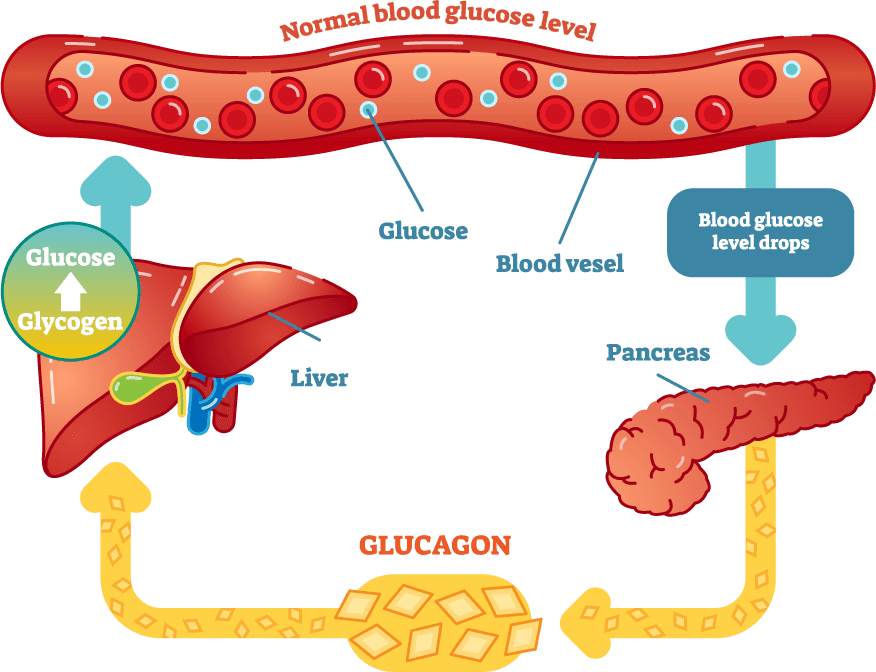
After eating, glucose from your food provides an important source of energy and insulin levels rise. As you spend longer without food, insulin levels fall and a hormone called glucagon increases. This encourages glycogen stored in the liver to be broken down to help maintain your blood glucose levels.
As fasting continues and glycogen stores fall, your body increasingly uses stored fat for energy. Fatty acids can also be converted by the liver into ketones, which can be used as an alternative energy source by tissues including the brain.
This shift is sometimes described as a 'metabolic switch', although it is not an instant change from burning glucose to burning fat. Your body uses a mixture of fuels, with their relative contribution changing gradually as the fasting period continues.
Does intermittent fasting help you lose weight?
A large systematic review published in 2025 compared different intermittent fasting strategies with conventional continuous calorie restriction and unrestricted eating.
People following intermittent fasting generally lost weight compared with those eating without restriction. However, when intermittent fasting was compared directly with conventional calorie restriction, the differences in weight loss were generally small.
Alternate-day fasting was the only fasting strategy that produced significantly greater weight loss than continuous calorie restriction, with an additional weight loss of around 1.3 kg. However, this difference was modest and, importantly, when the researchers looked at studies lasting six months or longer, there was no longer a significant difference between intermittent fasting and continuous calorie restriction.
This suggests that intermittent fasting can certainly help you lose weight, but it doesn't appear to be substantially more effective than reducing your calorie intake in a more conventional way.
Longevity starts with awareness
Less than £1/day. Test 115+ biomarkers. Personalised plan and 1:1 GP support.
What about other health benefits?
Intermittent fasting is often claimed to provide additional benefits for blood sugar control, cholesterol, blood pressure and other markers of metabolic health.
There is evidence that some of these markers can improve when people follow intermittent fasting. However, many of the same improvements occur with conventional calorie restriction and weight loss.
For example, the 2025 systematic review found no significant advantage for HbA1c or HDL cholesterol when intermittent fasting was compared with continuous calorie restriction. This makes it difficult to say that fasting itself is responsible for these benefits rather than the reduction in calorie intake and resulting weight loss.
There is some interesting research suggesting that when you eat could also matter. Small studies of early time-restricted eating, where people consume their food earlier in the day, have demonstrated improvements in measures such as insulin sensitivity even without weight loss. However, these studies have generally been small and conducted in specific groups, so more research is needed before we can say whether these effects translate into meaningful long-term health benefits.
So, should you try intermittent fasting?
Whether intermittent fasting is useful depends largely on your goals and whether this style of eating suits your lifestyle.
If your main goal is weight loss, intermittent fasting can be an effective way to reduce your calorie intake. Some people may find it easier to limit the hours or days in which they eat rather than continually monitoring how much they eat. If that approach works for you and is sustainable, intermittent fasting can be a perfectly reasonable option.
However, don't feel that you need to force yourself to fast to lose weight. If skipping breakfast leaves you hungry, makes exercising difficult or leads you to overeat later in the day, conventional calorie restriction appears to work just as well in the long term.
As for the additional claims surrounding intermittent fasting, the evidence is much less convincing. There are interesting findings around insulin sensitivity, meal timing and cellular pathways, but we don't currently have strong evidence that intermittent fasting provides substantial additional benefits for inflammation, metabolic health or longevity compared with other approaches to maintaining a healthy weight and diet.
Intermittent fasting is therefore best thought of as one way of structuring your diet, rather than a shortcut to better health.
References
1. Semnani-Azad Z, et al. (2025). Intermittent fasting strategies and their effects on body weight and other cardiometabolic risk factors: systematic review and network meta-analysis of randomised clinical trials. BMJ.
2. Patikorn C, et al. (2024). Intermittent fasting and health outcomes: an umbrella review of systematic reviews and meta-analyses of randomised controlled trials. eClinicalMedicine.
3. Sutton EF, et al. (2018). Early time-restricted feeding improves insulin sensitivity, blood pressure, and oxidative stress even without weight loss in men with prediabetes. Cell Metabolism.
4. Liu D, et al. (2022). Calorie restriction with or without time-restricted eating in weight loss. New England Journal of Medicine.
5. Zhang Q, et al. (2024). Adverse events profile associated with intermittent fasting in adults with overweight or obesity: a systematic review and meta-analysis of randomised controlled trials. Nutrition Journal.
Related articles



Test 124 biomarkers for fine-tuning your health
See your results in 3 days with high-level accuracy and a certified GP-reviewed action plan